

No Products in the Cart
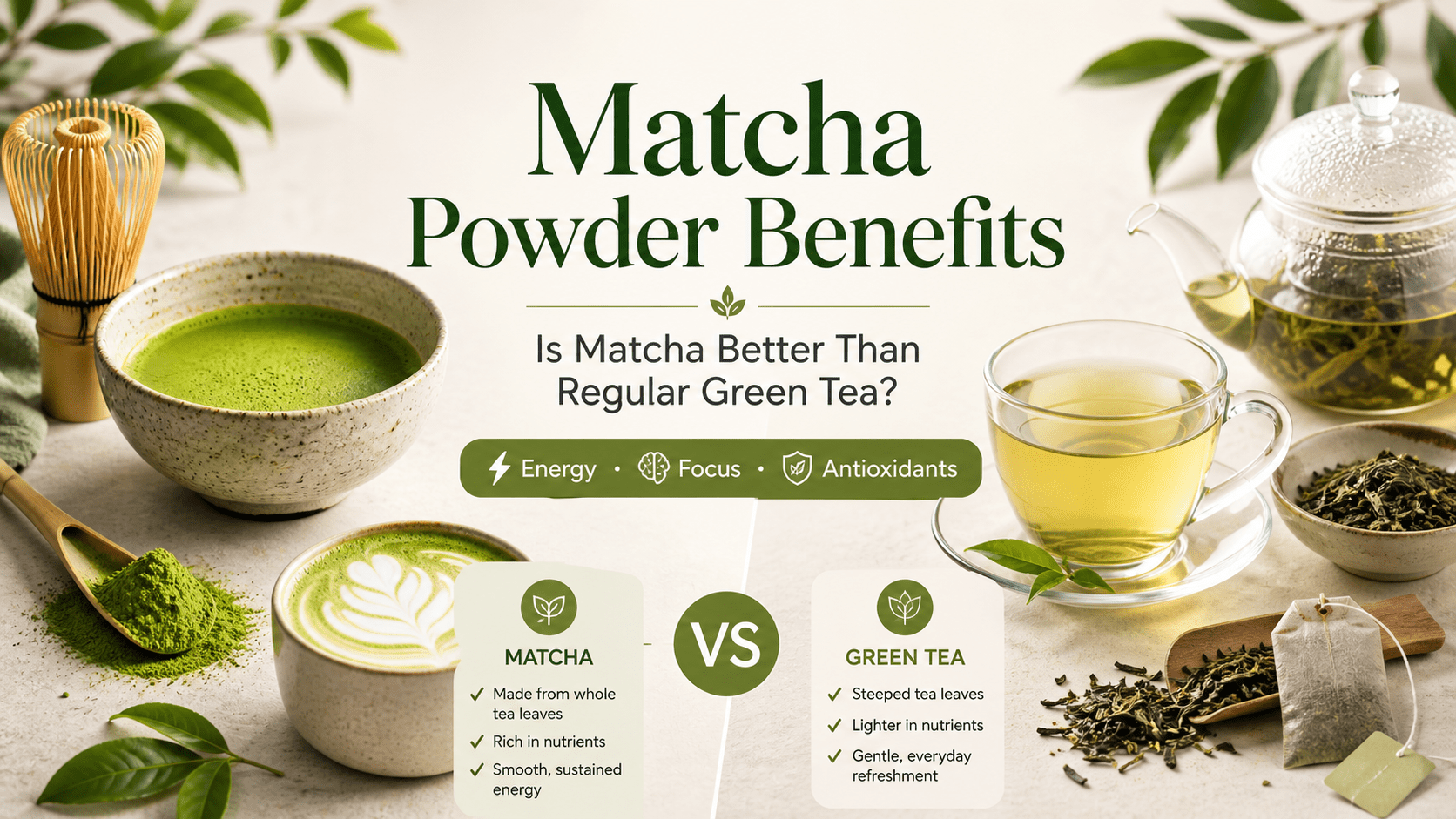
Matcha Powder Benefits: Is Matcha Really Better Than Regular Green Tea?
They come from the same plant. So why does matcha feel so completely different and is it actually worth the switch? Here's an honest answer.
I used to think matcha was just green tea in powder form. Same thing, fancier packaging, higher price tag. That's what it looked like from the outside. Then I started actually looking into how it's made and I changed my mind pretty quickly.
This isn't a post that's going to tell you matcha cures everything. It doesn't. But there are a few real, meaningful differences between matcha and regular green tea that are worth understanding especially if you drink tea for your health and not just for the taste.
They Come From the Same Plant — So What's Different?
Both matcha and green tea come from Camellia sinensis the same tea plant. The differences come from how the plant is grown and how you end up consuming it.
With regular green tea, you steep the dried leaves in hot water for a few minutes and discard them. Most of what's in those leaves stays in the leaves. You're drinking a diluted version of what the plant actually contains.
Matcha is different in two important ways. First, the plants are shade-grown for 3–4 weeks before harvest. Blocking sunlight forces the plant to produce more chlorophyll and more of an amino acid called L-theanine both of which matter a lot for the benefits you get. Second, after harvesting, the leaves are stone-ground into a very fine powder. When you make matcha, you dissolve that powder into water. You're consuming the entire leaf not just what steeps out of it.
That's the real difference. Not the form, not the color the fact that you're getting the whole thing.
How Do the Two Actually Compare?
| Factor | Regular Green Tea | Matcha Powder |
|---|---|---|
| How consumed | Steeped, leaves thrown away | Whole leaf dissolved and drunk |
| Antioxidants (EGCG) | Moderate | Up to 137× more than steeped tea |
| L-theanine | Low | High — boosted by shade growing |
| Caffeine per cup | ~30–50mg | ~70mg — released more slowly |
| Energy feel | Quick spike, sometimes a crash | Calm, sustained focus for hours |
| Chlorophyll | Minimal | Very high — supports detox |
The Benefits That Are Actually Worth Talking About
1. Clean Energy Without the Jitters
This is the one most people notice first. Matcha has more caffeine than green tea around 70mg per cup compared to 30–50mg but it doesn't feel like it. L-theanine slows down how quickly caffeine is absorbed. Instead of a quick hit that leaves you anxious and then tired, you get a gradual build-up of focus that lasts 4–6 hours.
People who've switched from coffee often describe it as "the same alertness, without the noise." That's a pretty accurate way to put it.
2. Significantly More Antioxidants
The main antioxidant in green tea EGCG (epigallocatechin gallate) is one of the most studied plant compounds in nutrition research. It's linked to everything from cellular protection to heart health to cancer prevention research.
Because you consume the whole leaf with matcha, you get dramatically more of it. Studies have found matcha contains up to 137 times more EGCG than a standard cup of steeped green tea. That's not a small difference that's a completely different league of antioxidant intake.
3. Focus and Mental Clarity
L-theanine doesn't just affect caffeine absorption it promotes alpha brain wave activity on its own. Alpha waves are associated with a calm, focused mental state. It's the same brain state you'd enter during light meditation or a period of deep creative work.
That's partly why matcha has been part of Japanese Zen Buddhist practice for centuries. Monks used it before long meditation sessions because it helped them stay alert without their minds racing. Whether or not you meditate, that kind of focused calm is genuinely useful.
4. Metabolism and Weight Support
Matcha isn't a weight loss product. But the combination of EGCG and caffeine has been shown in studies to support thermogenesis — the rate at which your body burns calories by around 8–10% when paired with regular physical activity. It also supports fat oxidation during exercise.
It's not going to do the work for you. But as one piece of a routine that already includes good food choices and movement, it adds something real.
5. Natural Detox Support
The shade-growing process dramatically increases chlorophyll content in matcha. Chlorophyll has been associated with supporting the body's elimination of heavy metals and environmental toxins. It's also what gives ceremonial matcha that vivid, almost electric green color if your matcha looks dull or yellowish, it's a sign the chlorophyll content is low and the quality isn't great.
Ceremonial Grade vs. Culinary Grade ,What's the Actual Difference?
When you start buying matcha, you'll see these two terms everywhere. Here's the short version:
Ceremonial grade comes from the first harvest of the season the youngest, most tender leaves at the top of the plant. These have the most L-theanine, the brightest green color, and the smoothest flavor with a natural slight sweetness. This is the grade you want if you're drinking matcha straight with just water. It's meant to be enjoyed on its own, without anything masking it.
Culinary grade comes from later harvests. The flavor is slightly more bitter and robust which actually holds up better in lattes, smoothies, and baked goods where the matcha needs to compete with other ingredients. It's also more affordable. Not inferior — just a different tool for a different job.
Baraguz Premium Ceremonial Matcha is a true 1st-harvest matcha, shade-grown and hand-picked in early spring, then stone-ground to preserve maximum nutrients. If you've never tried high-quality ceremonial matcha before, this is a clean starting point — no fillers, nothing added.
→ See the product here
→ See the product here
Who Is Matcha Actually Worth It For?
Regular green tea is genuinely good for you. I'm not going to pretend it isn't. If you enjoy it and it's part of your routine, there's no urgent reason to switch. But matcha is worth considering if you recognize yourself in any of these
You drink coffee for the focus but dislike the crash or the anxiety that sometimes comes with it. You want to get serious about antioxidant intake without taking supplements. You're trying to support weight management and want something that actually does something beyond just being "healthy." You're sensitive to caffeine and find coffee too intense matcha's caffeine-L-theanine balance is much smoother for a lot of people.
It's also just more versatile than regular green tea. Matcha lattes, matcha smoothies, matcha in oatmeal it's easy to build into a morning routine in a way that steeped tea isn't.
Does Matcha Have Any Downsides?
Yes and you should know them. More caffeine than regular green tea means it's not the right choice late in the day if you're sensitive to caffeine and want to sleep well. Some people experience mild nausea when they drink it on an empty stomach starting with half a teaspoon and having a small snack first usually solves this.
There's also the question of lead content. All teas absorb trace amounts of lead from soil. Because you consume the whole leaf with matcha, origin and quality matter more here than with regular green tea. Stick to Japan-sourced matcha from reputable farms the agricultural standards are stricter and lead levels significantly lower than matcha grown elsewhere.
And honestly the taste takes some getting used to. It's earthy, slightly grassy, umami in a way that regular green tea isn't. Most people who stick with it for a week or two end up preferring it. But if you hate it immediately, a matcha latte with oat milk is a much gentler entry point than drinking it straight.
How to Make Matcha Properly
Most people who say they don't like matcha made it wrong. Water temperature is the main culprit boiling water makes matcha bitter and destroys some of the beneficial compounds. Here's how to do it right:
- 1Sift 1-2 teaspoons of matcha powder into a bowl or cup. Sifting prevents clumping and makes a much smoother drink.
- 2Heat water to 70–80°C (160–175°F). If you don't have a thermometer, let boiling water sit for 2–3 minutes before using it.
- 3Add about 60ml of water and whisk in a quick W or M motion until frothy. A bamboo chasen whisk works best a small regular whisk works too.
- 4Top up with more water for a thinner tea, or steamed milk for a latte. Oat milk and almond milk both work really well.
- 5Drink it fresh. Once matcha is mixed, it starts to oxidize don't let it sit more than a few minutes.
If you want to actually try what good ceremonial matcha tastes and feels like, Baraguz ships premium 1st-harvest matcha — Japan-sourced, stone-ground, nothing added.
Shop Ceremonial Matcha — $64.99
